Iron Man
May 17, 2008
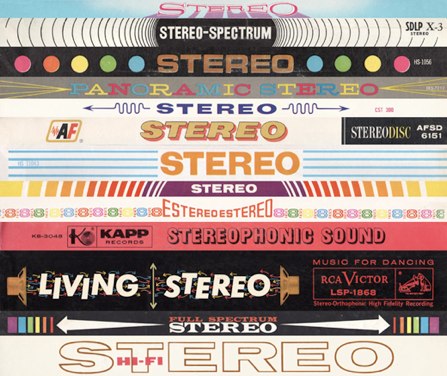
So just for a moment, imagine if the Cardigan’s Iron Man cover was the one they went with for the movie. (Sorry, another thinly veiled post to demonstrate a new feature, S3 integration.)
Science Machine from Chad Pugh on Vimeo.
Testing out some new Tumblr-like code.
This is a time-lapse of an Adobe Illustrator master doing his thing. One of my favorite new Portishead songs provides the soundtrack.
Thinking of starting a business? Just follow along with these convenient lists!
It seems the trend with successful CEOs (and some less so) is to post a long list of things and call them your “rules for startups.” You get gems like “NEVER EVER EVER buy swag” or “Fire people who are not workaholics. don’t love their work…” along with the ordinary new business penny pinching tips. Must be nice to have those sorts of problems.
If I did a list based on my startup experiences it would be pretty short. Just one item actually:
This is the hardest thing you’ll have to solve in your new business. Deciding on what sort of chairs and tables and soft drinks to stock will pale in comparison. Screw up Step 1 and you’ll be another small business statistic.
Since we’re on the internet, help (and more lists!) are just a search away. One of my favorites is from Evhead, Will it fly? How to Evaluate a New Product Idea. His first item, Tractability, is probably the weakest, don’t let it slow you down. The rest ask very pointed questions about your startup idea: How much value can you ultimately deliver? Is it clear why people should use it? And so on.
Foosball or table tennis? Where’s the official startup CEO decision on that?
From Kevin Kelly’s 1,000 True Fans posted on March 4, 2008:
A creator, such as an artist, musician, photographer, craftsperson, performer, animator, designer, videomaker, or author - in other words, anyone producing works of art - needs to acquire only 1,000 True Fans to make a living.
And published a day later, on March 05, 2008, Reznor makes $750,000 even when the music is free:
And it appears to be working quite well for Reznor, who has managed to sell all 2,500 copies of his $300 package without major label backing or much in the way of splashy marketing. If Reznor’s earlier experiments in digital distribution failed to recoup their costs, he’s clearly learned his lesson: grossing $750,000 in the space of three days isn’t a bad haul for any businessperson.
So it seems Kevin’s concepts can easily work for someone like a Trent Reznor. Kevin does spend a good portion of the article on how a lesser known could make this work as well.
I’ve been trying to come to grips with CF lights. Saving money on my electricity bill is a good enough motivator, however I’m a stickler for nice lighting and won’t settle for something that saves money yet looks ugly. The saving the environment in the abstract makes a lot of sense, of course, but I also want an attractive room. Do I need to compromise on that?
So my first experiment with CF lighting was bad. Light bulb burned out at home, unscrewed it, saw it was a 60w, went to the hardware store, go to lighting aisle looking for a 60w, see nothing, ask clerk, clerk knows nothing but says check the packaging “usually says what wattage they are similar to”, find something that seems to be 60w-ish, take it home, screw it in, turn it on and nothing! Is it broken? Oh wait, now it’s sorta glowing. It has to warm-up? This is crazy. Now I’m bathed in a cool blue chemical looking light. Great. This is progress. So just knowing a wattage doesn’t work anymore. Now you need to know obscure terms like lumens and measuring color using degrees and spiral or reflector and will it dim or not and on and on.
The CF light industry thinks if it just repeats “SAVE THE ENVIRONMENT” over and over again it has done its job. How wrong they are. There’s a growing body of criticism online: Seth Godin weighs in with Why CFL Doesn’t Sell, a piece in the Washington Post last year back about the “wife test” for CFL, Fluorescent Bulbs Are Known to Zap Domestic Tranquillity, and Steve Portigal has a few posts, e.g. I wanna push you around, well I will, I will, too. Wrong story, bad story, whatever. It needs work CFL industry.
I fear for you CFL industry. Need I remind you of another industry that thought it was OK forcing people to use trivia & jargon? That’s the computer industry. And it’s full of weird words and measurements and spawned a whole new industry, the computer support business, to help everyday folks. Can you imagine a Geek Squad for helping people find & install the right CFLs? How wrong is that? CFL industry, before it’s too late, start working on a new story with a better ending. Educate us, don’t assume.
Found this little scrap in a pocket of a coat I rarely wear. Something I scribbled a long time ago when I was figuring out how best to transition to experience design.
It’s a list of things I enjoyed doing and wanted to spend more time doing: “Presentation, Conceptualizing, Communication: drawing, motion/video/animation, writing, Structure, architecture, env design” (Pretty certain I meant “environment” for “env”.)
Today, many years later, how much experience design fun am I having? Not enough! Hardly any video, no animation, very little drawing. Nothing but numbers buried in reports. It’s easy to blame the usual things: tight project schedules, disengaged clients, budgets, complacency, etc. Bah—lame. Really, there’s no good excuse.
Recently, in the design world there’s been a discussion regarding a research technique, the persona, and how they’re used and misused. For background read these: Persona Non Grata, Personas 99% Bad? and Personas are NOT a Document.
Couldn’t come at a better time for me. As I sit here fretting about research, along comes Dave Robertson with all the answers. His article, “What would we do if they banned personas?“, laid it all out for me and presented a very clear direction. Ultimately, personas are a tool to communicate and whether you use them or not, you still need to communicate. That’s my problem! Communicating through reports isn’t particularly satisfying or effective.
Even though Dave’s article was really focused on persona use, my takeaway was a reminder of the truly inspirational communication tools available:
Go read the whole thing; lots of wisdom in it.
There are some interesting parallels between the ideas in Janine Benyus’s book Biomimicry: Innovation Inspired by Nature and Richard Gabriel’s recent essay “Design Beyond Human Abilities” (big PDF).
Biomimicry is a survey of solutions the natural world has come up with to solve problems. Everything from spider webs to photosynthesis to the way chimps medicate themselves in the wild is covered. The end chapter takes a look at what we could learn from nature and apply to various industrial processes. After all nature works at room temperature, gets power from the sun and generates no harmful by-products.
Gabriel’s essay takes a look what it would take to build Ultra Large Scale Systems, which he defines as something impossible to build because of today’s software engineering technology. For impossible, substitute “trillions of lines of code, millions of computers, real time requirements with life critical applications.” His essay spins off on a number of fascinating tangents and brushes upon the natural world, both from a civic planning and a biology perspective.
So from Biomimicry, we see an end result (e.g. oyster nacre, incredibly strong, stronger than man-made composites, safe) without really knowing how to recreate and apply it. And in Gabriel’s essay, he makes a good case for extending the Biomimicry lessons and applying them to these ultra large scale systems as well. What are the technical analogs to “room temperature, sunlight, water and no harmful by-products” for ultra scale system design?
In lieu of anything actually new, how about a walk down memory lane Play with the Machine style?
January 2005
Tara Mcpherson: “Fantastic poster maker & illustrator. Letterpress-esque, check out the Stereolab one. She sells them, Stereolab is on $35.” Timely even! Her stuff is featured prominently in Juno’s (from the movie Juno) bedroom.
January 2004
FSDB: “FSDB is a file system data base. FSDB provides a thread-safe, process-safe Database class which uses the native file system as its back end and allows multiple file formats and serialization methods. Users access objects in terms of their paths relative to the base directory of the database […]” This was (is?) and all Ruby thing. Still kicking it seems—last updated October 2006. I never did anything with it, my Ruby love already fading in 2004. So many alternatives nowadays. What to choose? Amazon S3 and SimpleDB and Thrudb all look interesting.
January 2003
Foreign Groceries Museum: “Nice. Lingua de Gato isn’t what you think.” This one is bittersweet. Steve recently lost the 5000+ photos he had on Flickr to a phishing scam. The above link clicks thru to a Flickr Not Found error page. I don’t like to throw the word tragic around but I think this qualifies. Such a loss.
January 2002
I had a thing for photologs in 2002 it seems:
PixelPile now defunct.
lightningfield still around sorta, last updated March 2007.
Noah Grey still very much alive & kicking.
April 2001 (earliest I have with easy archive access)
Turning Point For BeOS, Users?: “It’s funny, I reformatted my BeOS partition this weekend. Needed more room for linux. Hadn’t booted into Be for over a year. Sad.” Everything in that sentence & title is long gone. No Byte, no Be. A lot can happen in 7 years.
Guess what still works? Amazon urls from 2001! For example, L’aventure Fantastique! Back in the day I used the weblog as my del.icio.us.
Thanks for your indulgence. One last one:
“Experience merely forgotten is seldom beyond recall, if we try hard and patiently to bring it back. It is only when we forget having forgotten that a door closes between us and the past.” Robert Grudin “Time and the Art of Living”
New stuff coming up! Really.
Not without the usual sadness…. So long Oscar Peterson, Ettore Sottsass, Don Herbert and so many more….
And hello 2008! Glad to meet you.
An interesting quote from Mark Bernstein about why conferences aren’t such fun places these days:
Still more fundamentally, the mass of guilt that weighs upon the field deadens our conferences. That guilt arises from the divergence of what we like from what we think we should like. We enjoy exciting new systems that do what nothing else could do; we think we should like systematic demonstrations that this widget lets students do a task 5% faster than that one. We enjoy daring prototypes and agile development; we think we should be planning our work and proving correctness. We enjoy astonishing code; we think we should write code so clear that our most mediocre students (and the management team) will grasp it without effort.
Maybe it’s wishful thinking but maybe some of that guilt comes from our lack of attention. Nowadays it is so easy to be physically present, yet mentally worlds away. With wifi & mobile service, you can be happily IMing or Twittering about the speaker with the monotone delivery anywhere.
So to that guy that was sitting next to me, typing madly and muttering to himself, during a really interesting session, I wished your batteries died and you lost all network connections and your pen ran out of ink. Time to face the present champ.
My mind wandered after that last post and I started to think about what it means to be human in today’s always connected world. Of course, it means you’re nothing unless you’re in someone’s social network (du jour) buddy list. Where does that leave the Big Corps trying so hard to fit in?
The companies I have a relationship with are in my friend list. Look at all the great info I have instantly available: what’s on sale, similar companies, communication. If I get fed up with them, I hit the “Remove Friend” link and they’re gone!
If a company needs to talk to me, I decide on what terms. Gap’s been really needy lately so I’ll divert all incoming messages to a throwaway email address. TiVO, on the other hand, gave me a great deal on an HD box—text me as soon as it ships!
The history of my interactions with companies is recorded in either a credit card statement, a piece of forgotten email or worse, something printed and mailed. Who can remember when you last flashed a device? Installed an update? I’d sure like having a single aggregated view, available anywhere and safely stored at some remote secure location.
Pretty much always have an IM client going. Most companies will send some sort of email notification, but why not IM too? There’s a little bit of IM use among Yahoo, AOL, etc. But it feels disjointed, robotic and more focused on marketing. If I no longer want the Gap sending me stuff it’s gone from my “buddy” list. More control for me!
And frankly any “customer support solution” is a failure if it’s designed to keep you from speaking to a real human being. (Then again, that’s not always a good thing.) Why the 5-10 minute delay? The diligent customer service rep is looking through the chat history, getting up to speed regarding my problem.
So Big Corps, these collective affinities aren’t going to stand around and wait for you. Accept my invite or say goodbye.
A post on Intermediary Factors had a couple of interesting quotes from a recent Jupiter Research report, “Networked Media: Thriving In An Intermediated World”
David Schatsky, president of Jupiter Research one comment speaks volumes if we put it into context of the emerging market. He says “By paying closer attention to the tendencies of the end user, these sites will be able to evolve and meet the needs of a wider online audience.”
and
Individual allegiance moves away from portals, firms and toward networks and network platforms where individuals create collective affinities.
Explains the motivation behind new businesses like Satisfaction and their “people-powered customer service” idea. Aggregate the bottom-up efforts of an audience, harnessing their contributions (the Q&A, the social good vibes, the conversation, etc) and add a framework for pulling out ratings, reviews & answers for a company of interest. What you end up with, theoretically, is a better customer service experience than the company itself could provide. (As I understand it!)
My little epiphany: I think a firm’s success will come from it being able to act human enough to engage in those collective affinities.
Math and architecture go hand in hand. Scale, proportion and ratio turn into the shapes and spaces we inhabit. The orientation of your home to the sun, lots of math. The stretching & shrinking of the glass windows in your office building, loads of math. Even your stairs, the risers and treads calculated to best fit the available space and your comfort (and expectations.) For an architect, there’s no escaping math. The architect’s gift is the ability to make it attractive while still retaining the engineering sensibilities. What happens when that architect is also a mathematician?
From A New Kind of Building?, Maurice Martel “was interested in generating architectural structures subject to spatial constraints (such as a given area in which they need to fit).” So he “settled on a project in which he would run 2D cellular automata on irregular grids determined by arbitrary polygons.” His ultimate goal was to design an actual 3D structure.
Using Mathematica he was able to go from this:
To this:
I think what’s interesting is just how benign the result of the Mathematica-assisted design process. Give certain architects free reign, no restrictions and no context and you could very well end up with more folly than form (or function.)
Jacques Tati’s Playtime is a wonderful movie; the setting, the color, the cinematography, the soundtrack, the fashion, everything, all wonderful. Sure there’s not much of a “traditional” plot, but this was the 60s, in Paris! Come on.
Googling around, you’ll find many articles & books discussing (usually) the film’s architecture and set design. You can read about “Tativille“, the modern metropolis built outside Paris for the filming and famous for being a grand masterpiece of architecture so expensive as to have bankrupted Tati and the production company. But there’s so much more to it than that….
Everytime I watch Playtime I get something else out of it. This last viewing left me impressed with all the poor product & environmental design Tati manufactured.
Screen grabs of some of the better examples:
This scene has an office security guy using the building’s intercom to announce a visitor. It’s a great example of obscure buttons, meaningless feedback, and needless complexity.
This scene shows a demonstration of a broom with headlights. It’s a fun scene: the demonstrator loads the batteries at the top, screws on the end piece with this ridiculously long little springy contact thing and then switches it on with a flourish. Great sound design too.
Here’s what happens when you design something without any consideration for the actual audience. The kitchen pass-through doesn’t actually fit the various serving platters.
More design in a vacuum. Notice the hanging adornments behind the bar, right at head level. The bartender can’t see his customers without ducking.
I don’t know why I like this one so much. The maitre d’ is always banging into the column, perfectly placed to be in the way. Also the entry isn’t wide enough for both the maitre d’ and guests to walk through so it’s always an awkward interaction.
If you look closely you can see the imprint of the chairs on the backs of the men’s suits. Nowadays maybe a Nintendo or Nike could get away with that, call it a guerilla marketing campaign, walk around with a logo on your back—it’s edgy!
The green neon cross beams it’s unappetizing glow over the food display. Who can decide what to eat? It all looks inedible and gross.
Thumbs up from me!